Patients at an Intermediate Risk for Falling
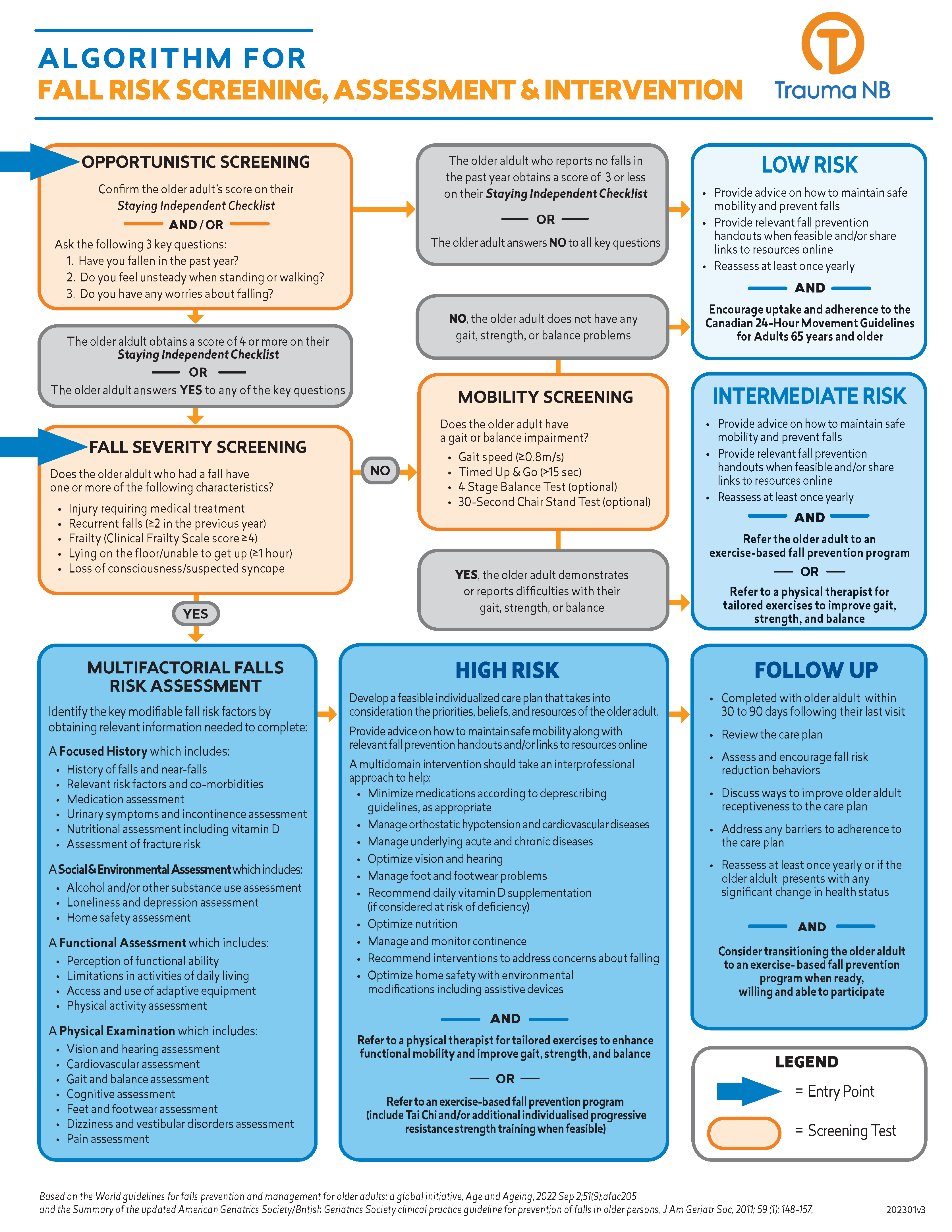
Patients at an Intermediate Risk for falling are patients who:
- Have failed Opportunistic Screening
AND / OR
- Passed Fall Severity Screening
AND
- Failed Mobility Screening
These patients either have a history of falling or are worried about falling, and have significant gait, strength, or balance impairments that place them at risk for falling.
This type of prevention could range from primary prevention, before a fall has occurred, to secondary or tertiary prevention where a fall may have already occurred. Regardless, the interventions at this level have the same goal as primary intervention: Preventing a future fall.
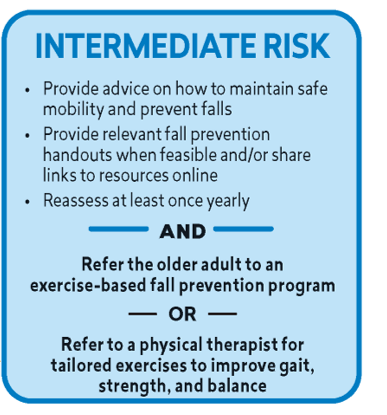
Given the identified gait, strength, or balance impairment that places them at risk for falling, primary health care providers need to refer patients to a physical therapist to address these impairments or refer the patient to an approved exercise-based fall prevention program.
As always, the patient should be reassessed at least once a year.
Exercise-Based Fall Prevention Programs
Not all exercise programs are fall prevention programs. There are particular items that must be included in an exercise program for it to quality as an exercise-based fall prevention program. Advising the patient to be "active" is not a sufficient intervention at this level.
The patient requires specific intervention to address and improve the identified gait, strength, and balance impairments. If it is not possible to clearly discern between exercise programs and exercise-based fall prevention programs, patients should instead be referred to a physical therapist.
For more information on approved and certified exercise-based fall prevention programs, please refer to:
www.FindingBalanceNB.ca
Full Algorithm: