Introduction
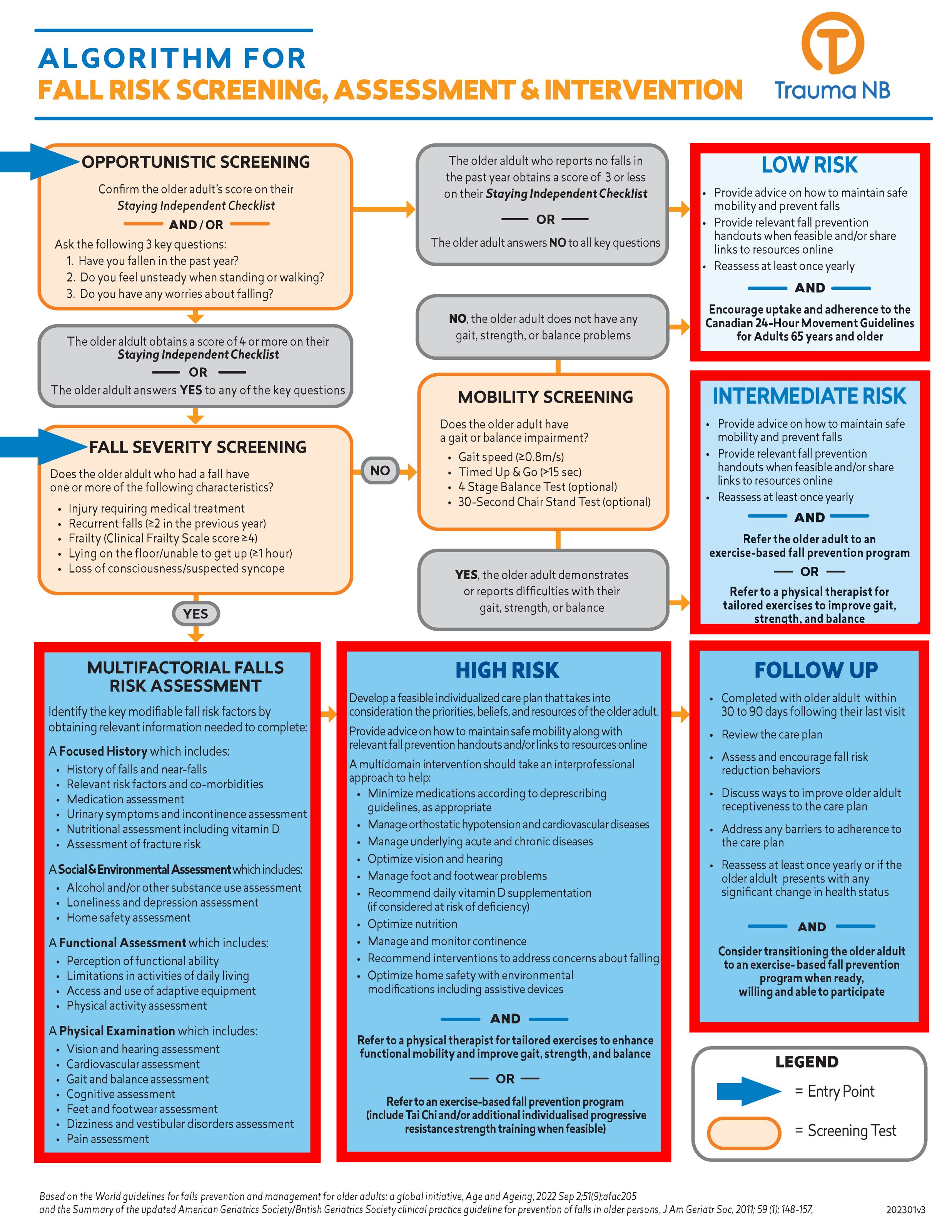
This lesson focuses on the specifics of what it means when a patient is identified as being at low, intermediate, or high risk for falling.
Objectifs d'apprentissage
By the end of this lesson learners will be able to:
- Describe the differences between being at low, intermediate, and high risk for falls.
- Provide appropriate interventions for individuals at low, intermediate, and high risk for falls.
Lectures obligatoires
- Algorithm for Fall Risk Screening, Assessment & Intervention
- Fall Risk Screening and Interventions Checklist
- Liste de vérification de la sécurité à domicile
- Liste de contrôle pour rester indépendant
- Canadian 24-Hour Movement Guidelines for Adults 65 years and older
Additional Resources (optional)
- World guidelines for falls prevention and management for older adults: a global initiative
- Trauma NB's Consensus Statement for the Prevention of Falls in Community-Dwelling Older Adults.