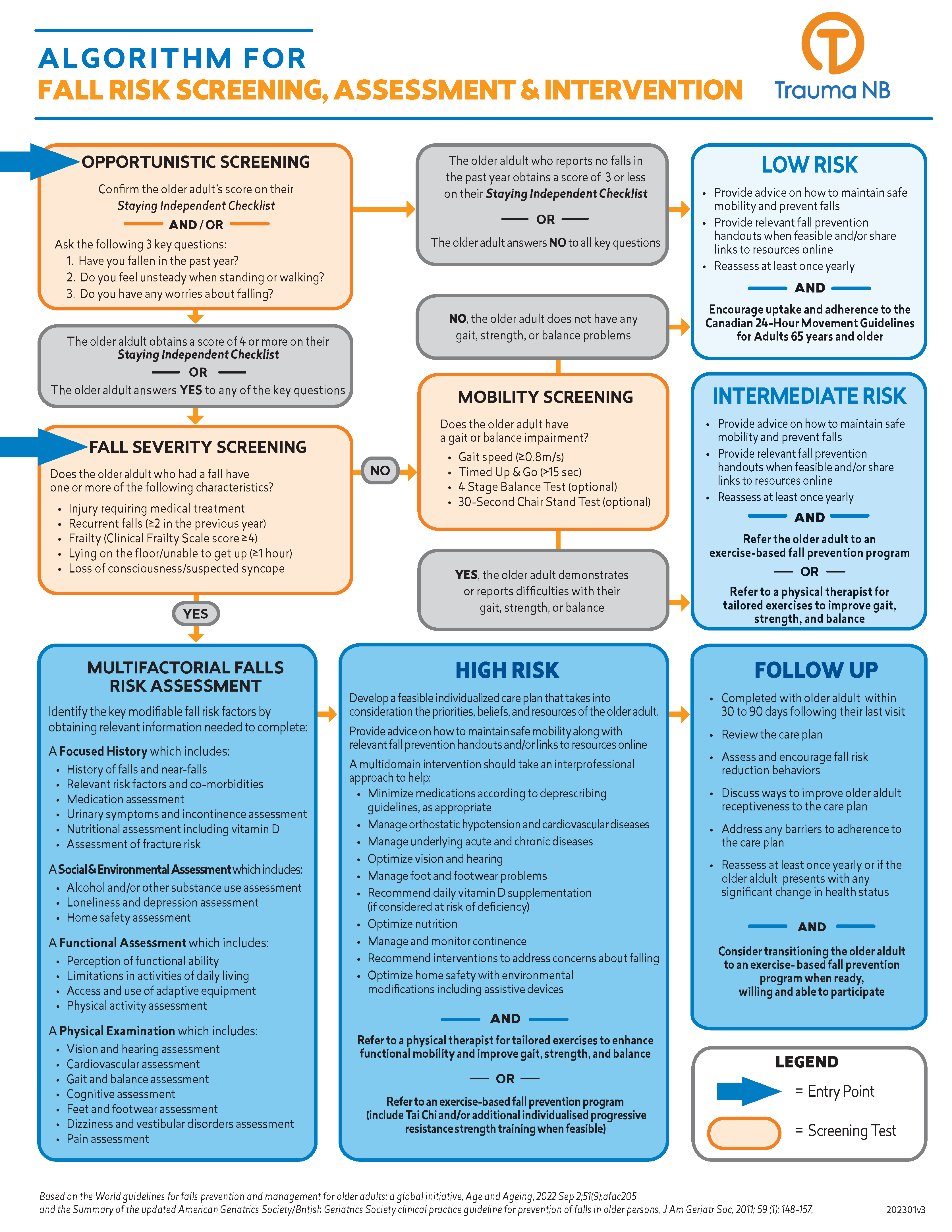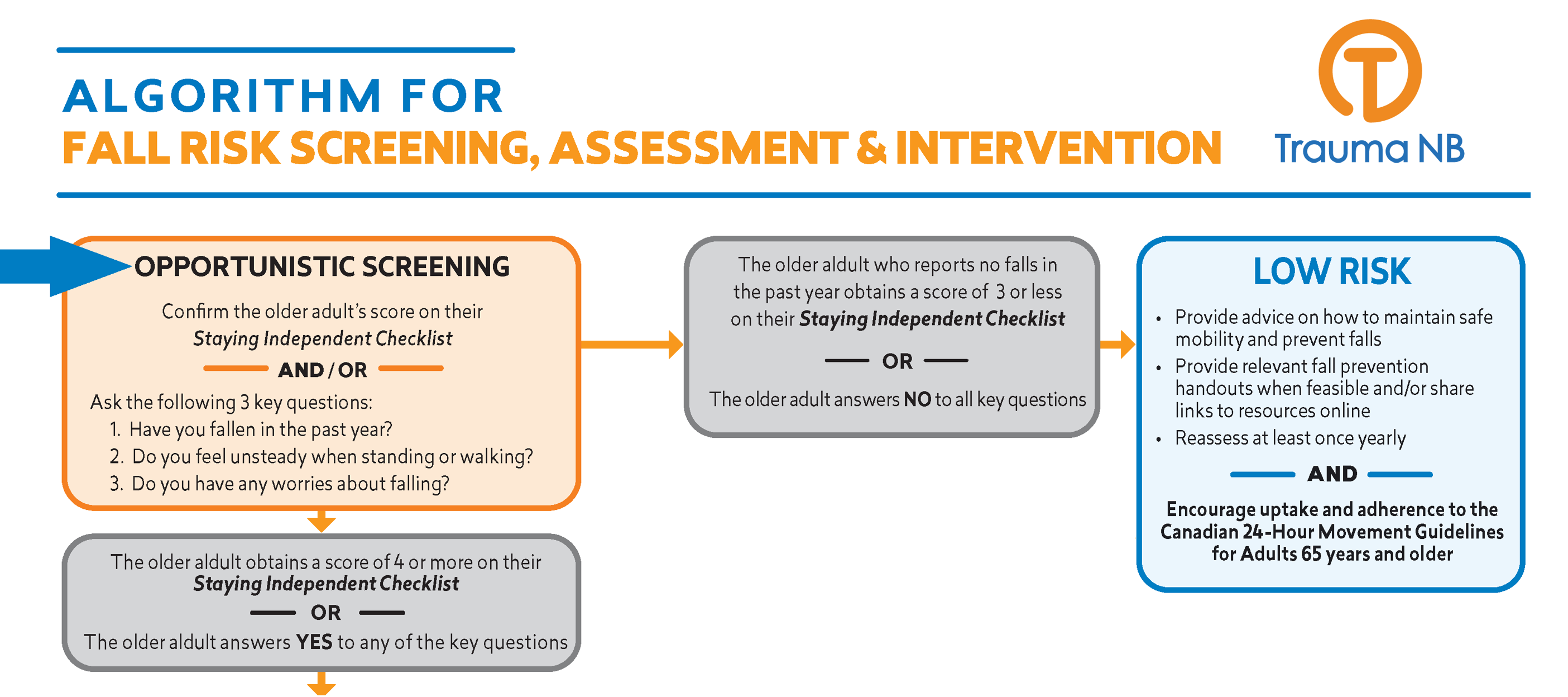
Dépistage opportuniste
Dépistage opportuniste has two components:
- Liste de contrôle pour rester indépendant
- Key Questions
Staying Independent Checklist:
Les Liste de contrôle pour rester indépendant is an incredibly useful tool that can be completed by patients either independently, or with a family member, friend, caregiver, or other health care professional. It does not need to be completed in a health care environment and requires no clinical expertise. This tool empowers patients to bring critical clinically relevant information to their primary health care provider and initiate the Algorithm for Fall Risk Screening, Assessment & Intervention.
It should be anticipated that patients will bring completed Staying Independent Checklists to their primary care providers unprompted, as they are available in the community and other health care settings. It is for this reason that the Liste de contrôle pour rester indépendant is considered Dépistage opportuniste. It is crucial that primary care providers are familiar with this tool and aware of the required next steps.
If a patient presents a completed Liste de contrôle pour rester indépendant, it is not necessary to also complete the Key Questions. This is because the Liste de contrôle pour rester indépendant is more in-depth and sensitive than the Key Questions; A patient who fails the Liste de contrôle pour rester indépendant but passes the Key Questions (answers "no" to all questions) should still be considered to have failed Dépistage opportuniste.
Key Questions:
There are three Key Questions that should be asked in the absence of a completed Staying Independent Checklist:
- Have you fallen in the past year?
- Vous sentez-vous instable lorsque vous vous tenez debout ou que vous marchez ?
- Do you have any worries about falling?
Failing Opportunistic Screening:
Answering "yes" to at least one of these Key Questions would be considered failing Dépistage opportuniste. In this case, the patient should then be moved to Fall Severity Screening.
Passing Opportunistic Screening:
Answering "no" to all of the Key Questions would be considered passing the Dépistage opportuniste. This would indicate that the patient is at Low Risk for falling.
ALL PATIENTS 65 YEARS OR OLDER SHOULD BE SCREENED FOR RISK OF FALLING EACH YEAR.
Full Algorithm: